
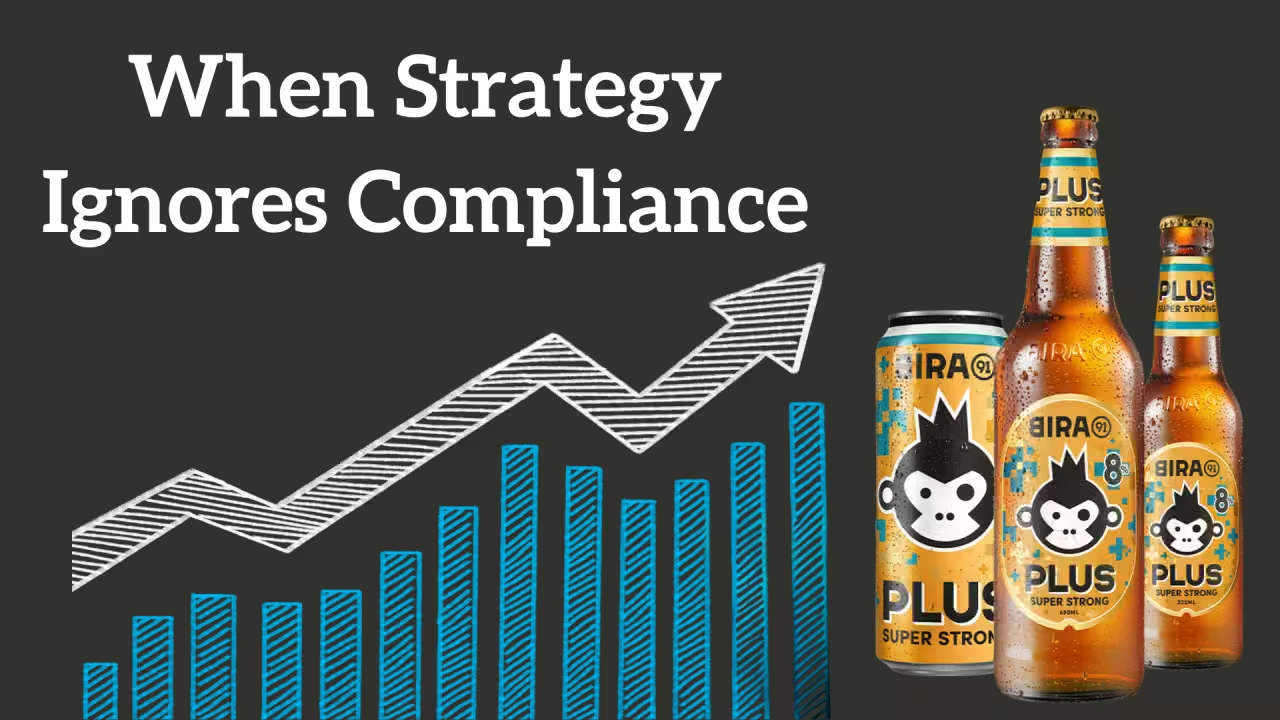
How does a company preparing for a blockbuster IPO nearly bankrupt itself? For Bira 91, it wasn’t a market crash or a faulty product. It was the removal of a single word from its legal name: a catastrophic misstep on the road to going public that cost a staggering ₹80 crore.
How can such a simple update freeze an entire business? Let’s break it down.
The Domino Effect: A Regulatory Avalanche
In preparation for its IPO, Bira 91’s parent company changed its legal name from “B9 Beverages Private Ltd” to “B9 Beverages Ltd.” This move, however, fatally overlooked the complex nature of India’s alcohol regulations.
With alcohol being a state subject, each of India’s states has its own distinct excise laws, licensing requirements, and label approval processes. The name change forced Bira 91 to navigate this complex patchwork from scratch, treating them as a “new entity” everywhere.
The result was a multi-state regulatory reboot that brought business to a grinding halt for 4-6 months. The brand didn’t just slow down: it vanished from shelves. Warehouses filled with unsellable stock while competitors like Simba and White Owl eagerly captured its market share, turning Bira’s operational limbo into their commercial opportunity.
The Financial and Internal Fallout
The operational freeze didn’t just impact the balance sheet; it triggered a profound crisis of confidence and survival within the company, demonstrating how a failure in regulatory strategy can quickly turn into a leadership and human capital disaster.
The numbers speak for themselves:
Financial Damage
- Revenue: Plummeted 22% to ₹638 crore in FY24.
- Sales Volume: Dropped from 9 million cases to between 6-7 million.
- Net Loss: Surged to ₹748 crore, a figure that exceeded the company’s total revenue.
- Investor Confidence: A potential ₹500 crore debt investment from BlackRock was withdrawn.
Internal Crisis
- Employee Petition: Over 250 employees signed a petition calling for the founder’s removal, citing governance failures.
- Financial Hardship: Salaries were delayed by 3-6 months, with total unpaid employee dues reaching an estimated ₹50 crore.
- Workforce Reduction: The company’s workforce shrank from over 700 to just 260.
The Core Lesson: When Strategy Ignores Compliance
This was not a bureaucratic snag; it was a catastrophic failure of strategic foresight. The leadership team treated state-level compliance as a back-office administrative task, not what it truly is in this industry: a core pillar of business continuity and market access.
A robust risk management framework would have mandated securing pre-approvals, planning a phased inventory transition to avoid write-offs, and building a financial buffer to absorb inevitable regulatory delays. This incident proves that in regulated industries, compliance is not a secondary function, it is a cornerstone of business strategy.
A Cautionary Tale for MSMEs
If a well-funded, high-growth company like Bira 91 can be crippled by a regulatory oversight, the risk for a Micro, Small, or Medium Enterprise (MSME) is existential.
The lesson for every founder is clear: deeply understand the regulatory environment of your industry before making any structural changes. What appears to be simple paperwork can have business-ending consequences.
For an MSME, investing in regulatory expertise is not just an overhead cost; it is the cost of staying in business—and that’s why we at MSME Hub take a strategic approach when it comes to your business decisions.